

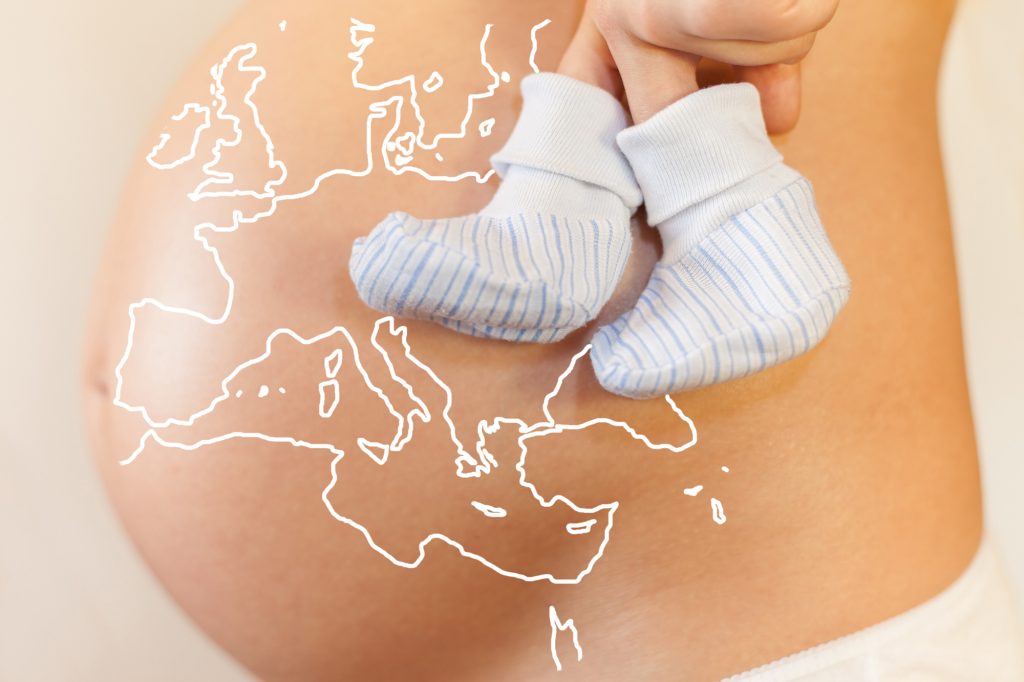
Maternity leave is a fundamental right for women, enabling them to care for their babies while preserving their health and well-being after childbirth. However, access to this leave varies considerably from country to country, creating significant inequality. This disparity is not only an issue of social justice, it also represents a major challenge for companies.
Maternity leave varies from country to country
According to the International Labor Organization (ILO), maternity leave remains a highly heterogeneous issue worldwide.

For example :
- Norway is an exemplary model for its progressive maternity leave policies. Mothers can benefit from 49 weeks of full leave or 59 weeks of part-time leave (Le Figaro – 2024).µ
- In France, mothers are entitled to 16 weeks’ maternity leave, divided into 6 weeks before the birth and 10 weeks after (économie.gouv – 2024).
- In the United States, the situation is very different. Maternity leave is not a guaranteed federal right, which means that its granting depends on companies. On average, women in the U.S. benefit from around 12 weeks of maternity leave, often unpaid (Science Po).
These inequalities can have profound consequences not only for the health of mothers and children, but also for gender equality in the workplace. In countries where maternity leave is inadequate or non-existent, women often find their careers penalized: loss of income, breach of contract, reduced career prospects…
The impact of maternity leave on companies
Inequalities linked to maternity leave have a direct impact on companies, as they affect employee well-being. Companies can play a crucial role by offering more generous maternity leave, for several reasons:
- Attracting talent
An inclusive and generous maternity leave policy is a decisive factor for many women when choosing an employer.
- Equality at work
Maternity leave is also a key lever for achieving gender equality in the workplace. Indeed, pay inequalities between men and women in equivalent positions increase sharply with the number of children: women’s pay is 31% lower for parents with three or more children (INSEE – 2020).
- Employee loyalty and commitment
Companies show that they care about the well-being of their employees, which fosters loyalty and commitment. It also helps avoid costly turnover, especially in sectors where recruitment and training take time and money.
- Mental health support for young mothers
Paid maternity leave is also important for the mental health of young mothers. A period of rest after childbirth helps prevent the risk of burn-out and post-partum depression.
Conclusion
Maternity leave is not just a public health issue, it’s also a strategic one for companies to promote inclusion and support working women who choose to combine an active professional life with motherhood. By offering fair and appropriate maternity leave, companies contribute to a future where women can fully exercise their professional and personal rights without suffering discrimination or structural inequalities.